

A collision can leave you sorting through two different problems at once: recovering from an injury and explaining what happened to an insurance company. Denver car accident trends provide useful context, but the evidence from your own crash is what you need to organize first.
For someone considering a Denver car accident lawyer, the practical questions are specific. What records should you save? How does disputed fault affect compensation? Which deadline applies? What would a settlement resolve, and what expenses still need to be understood?
Start with a clear distinction: traffic statistics describe groups of crashes. A car accident claim concerns particular people, vehicles, injuries, and losses. Understanding both helps you ask better questions without treating a regional statistic as proof of your case.
What the Denver region’s crash trend actually shows
The Denver Regional Council of Governments, or DRCOG, reports an estimated 9,608 fatal or severe-injury crashes in the Denver region from 2020 through 2024. Those crashes killed at least 1,564 people and seriously injured more than 9,500 people. DRCOG also reports that regional traffic fatalities increased by more than 30% from 2020 to 2024.
DRCOG receives crash data annually from the Colorado Department of Transportation and cleans and maps it for regional use. Its Regional Vision Zero work includes a high-injury network and priority corridors to help agencies direct safety improvements. The regional goals are zero traffic fatalities by 2040 and zero serious traffic injuries by 2045.¹
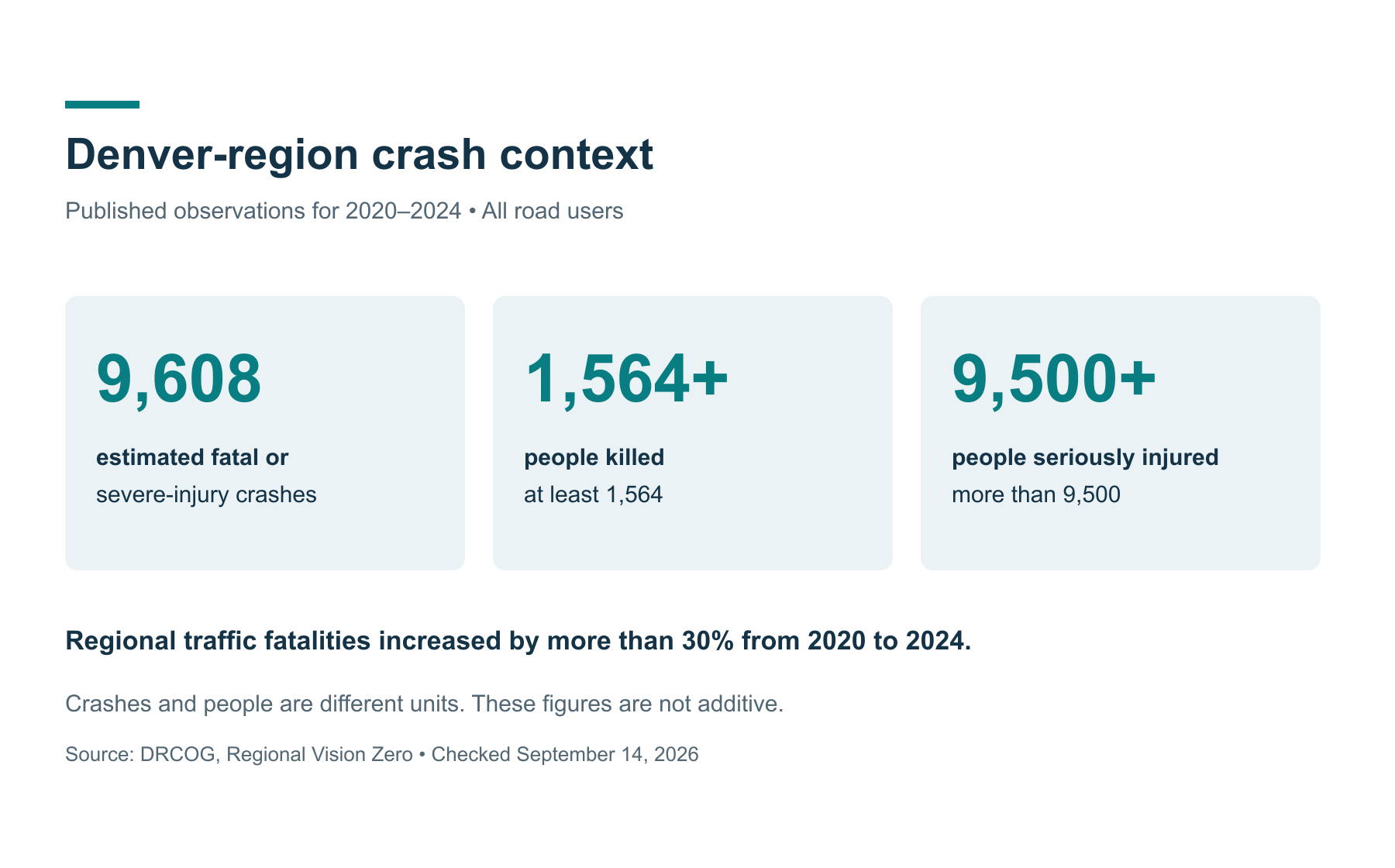
Figure 1. Published regional figures from the source above. Crashes and people are different units; these figures should not be added together.
These figures cover the Denver region, not just the City and County of Denver. They also describe serious traffic outcomes across road users, rather than a count limited to occupants of passenger cars. The observation period ends in 2024; the figures are not a 2026 year-to-date total. For a separate city-level comparison, see the breakdown of Denver car accident statistics, which distinguishes recorded incidents from traffic deaths.
Read the geography, time period, and unit before the headline
When you encounter a claim that “Denver accidents are rising,” check what the number measures. A useful reading checklist is:
- Geography: Does it cover the city, a county, the metropolitan region, or all of Colorado?
- Period: Is it a full calendar year, several years combined, or part of the current year?
- Outcome: Does it count all reported crashes, serious-injury crashes, fatal crashes, or people killed?
- Comparison: Are both periods measured using the same definitions?
- Exposure: Is it a raw count or a rate adjusted for travel or population?
For example, one crash can involve several people. An increase in deaths is not automatically the same percentage increase in the number of crashes. A regional count also cannot tell you the probability that a particular trip will end in a collision without an appropriate measure of travel exposure.
The practical takeaway is to be precise when describing your own incident, too. Record the actual intersection or highway segment, direction of travel, date, approximate time, and responding agency. “Near Denver” is less useful than a location someone else can identify.
Connect crash patterns to the evidence you need
An intersection collision, a rear-end crash, and a collision involving a pedestrian raise different questions. Use the physical circumstances to decide what information to preserve, rather than assuming a familiar crash type settles responsibility.
The examples below are an evidence checklist, not a ranking of Denver’s most common causes. The regional totals above do not establish which behavior caused your crash.
| Situation | Questions to investigate | Information to preserve |
|---|---|---|
| Rear-end collision | Where was each vehicle before impact? Was there an earlier collision or sudden lane change? | Wide scene photographs, damage photographs, dashcam footage, witness descriptions |
| Turning or intersection collision | Which movement was each driver making? What signals, signs, or obstructions were present? | Approach views, lane markings, signal locations, nearby camera locations |
| Suspected distracted driving | What did anyone actually observe, and when? | Witness contact details, contemporaneous notes, original video |
| Suspected speeding | What supports the observation beyond an impression? | Available video, vehicle positions, debris locations, witness accounts |
| Pedestrian or bicycle collision | Where were the people and vehicles moving? What was visible from each approach? | Crosswalk or bike-lane layout, lighting, sight lines, photographs taken safely |
| Several vehicles or a commercial vehicle | What was the impact sequence? Who owned or operated each vehicle? | All vehicle and insurance details, company markings, separate witness accounts |
Treat a concern such as distracted driving as a question for investigation. In your notes, distinguish “I saw the driver looking down” from “the driver was texting.” The first describes an observation; the second may assume a fact you did not actually see.
Preserve context along with close-up damage
A close-up photograph of a broken light answers a different question from a wide photograph showing the intersection. If it is safe, collect both. Include the vehicles’ positions, lane markings, traffic controls, nearby obstructions, and the approach to the collision location.
Save original files along with any copies you share. Keep the date, approximate time, and photographer’s name in your evidence notes. If you draw a diagram later, label it as your recollection and identify any part you are uncertain about.
A useful police report review follows the same discipline. Check names, vehicle descriptions, location, and witness details. Separate factual inaccuracies from disagreements about what happened. Ask the reporting agency about its process for correcting factual information, and retain a copy of the version you reviewed.
Colorado legal issues that can change a car accident claim
Colorado’s statutes make several distinctions worth understanding before discussing settlement. These are general rules, not a calculation of any individual person’s rights or filing date.
Comparative negligence: fault can reduce or prevent recovery
Under C.R.S. § 13-21-111, a person’s negligence reduces recoverable damages proportionally and can bar recovery when it is equal to or greater than the negligence against which it is compared. In a simplified case involving one injured claimant and one defendant, 50% or more fault assigned to the claimant bars recovery under this rule. Below that threshold, the claimant’s percentage reduces damages.
For illustration, assume proven damages of $100,000, one claimant, one defendant, and no other adjustments. At 25% claimant fault, the arithmetic is $100,000 × 75% = $75,000. At 50%, the result under the threshold rule is $0, not $50,000.
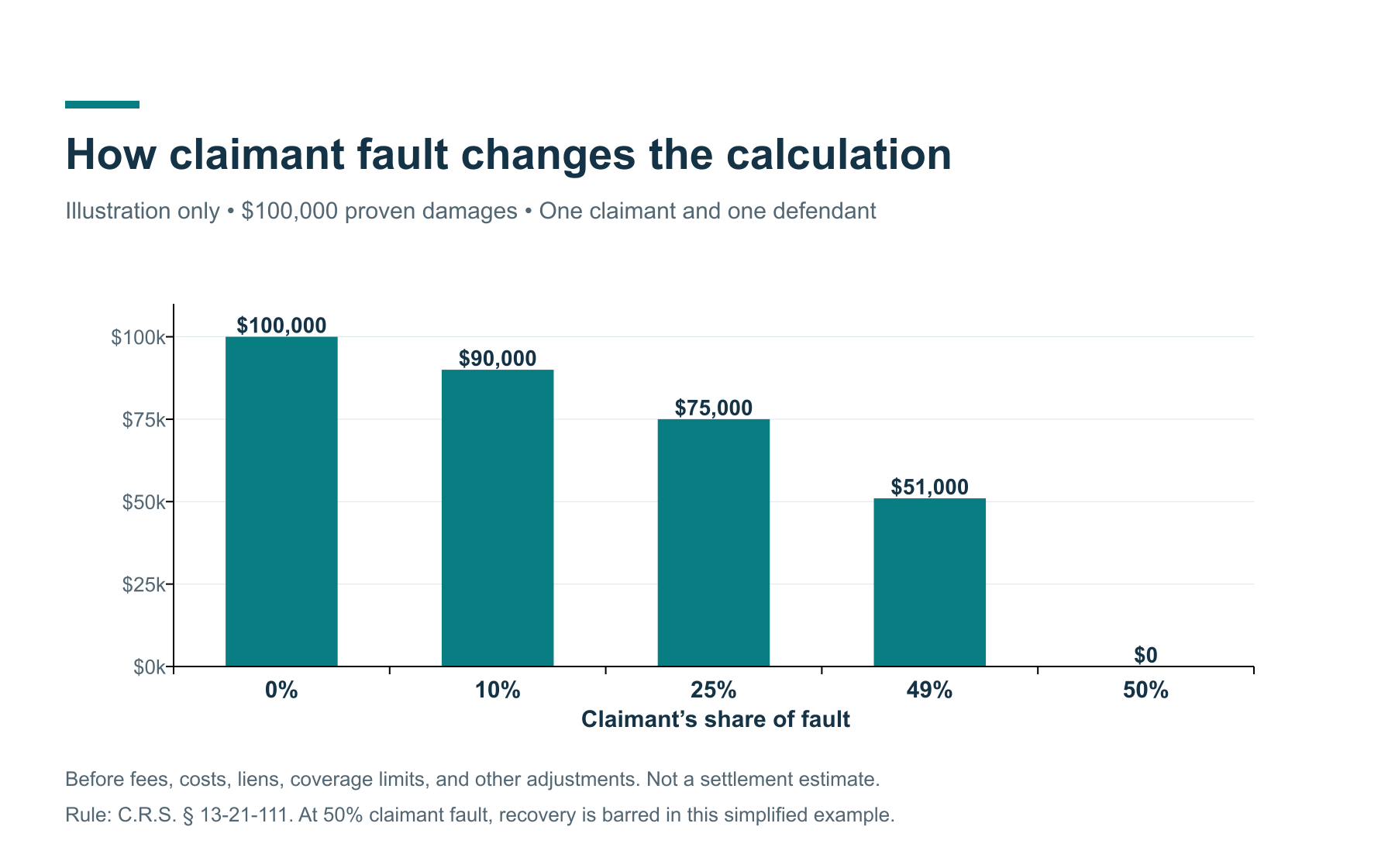
Figure 2. Hypothetical one-claimant, one-defendant example of the comparative-negligence rule explained here. Amounts are before fees, costs, liens, coverage limits, and other adjustments; they are not settlement estimates.
Multiple parties require a separate analysis
C.R.S. § 13-21-111.5 generally ties a defendant’s liability to that defendant’s share of fault, subject to statutory exceptions. It also addresses fault attributed to certain nonparties. A crash involving several vehicles, an employer, or another potentially responsible person therefore needs more analysis than the simple chart above.
For the consumer, the useful first step is to identify every vehicle and participant you know about. Record ownership and company information when available, and avoid assuming that only the driver immediately next to your vehicle could matter.
A lawsuit deadline is different from an insurance conversation
C.R.S. § 13-80-101(1)(n) generally provides a three-year limitation period after accrual for tort actions involving bodily injury or property damage arising from motor-vehicle use or operation, with specified exceptions. Accrual is the legal starting point for the deadline; determining it can require more than looking at a calendar.
Ask a lawyer to identify the applicable deadline for each potential claim. Wrongful death, government involvement, product-related claims, and uninsured or underinsured motorist disputes need their own review. Do not treat ongoing discussions with an insurance adjuster as confirmation that a lawsuit deadline has been preserved.
Noneconomic damages are not the same as medical bills
C.R.S. § 13-21-102.5 describes noneconomic loss as harm such as pain and suffering, inconvenience, emotional stress, and impaired quality of life. Its current framework includes a $1.5 million limit for the covered category of ordinary civil claims accruing on or after January 1, 2025; the statute contains additional filing-date provisions and exceptions, and directs medical-malpractice and wrongful-death cases to other rules.
That limit is not an estimate of a car accident case’s value, an insurance policy limit, or a promised payment. Its application depends on the kind of claim and the relevant dates.²
The most productive legal consultation connects these rules to facts: whose conduct is disputed, what evidence is available, which losses can be documented, who might be responsible, and which deadlines require attention. Ask the attorney to explain where an assumption could change the analysis.
Build a record of injuries, expenses, and missed work
Organize your records so another person can follow the sequence without reconstructing it from dozens of messages. Keep medical care decisions with qualified health professionals, and seek emergency assistance when needed. For the claim file, record what care you received and retain the resulting documents.
A useful folder structure separates medical treatment, work and income, vehicle and other property damage, crash evidence, and insurance correspondence. Use dates in filenames and keep a short index describing what each document contains.
Medical treatment and recovery
For background on the long-term effects of a car accident, consider how your records will explain changes in daily activities, treatment needs, and work over time.
Retain appointment summaries, referrals, treatment plans, bills, payment receipts, and insurance explanations of benefits. Record symptoms and functional limitations in your own words, including when you noticed them. Avoid adding a diagnosis that a clinician has not made.
If a previous injury or condition is relevant, include it in the history you provide to your treating professional and attorney. A clear record should make it possible to distinguish your earlier condition, the incident, and your subsequent experience.
When appointments are difficult to attend because of transportation, cost, or work, make a contemporaneous note and discuss the obstacle with the provider. Accurate context is more useful than trying to make the recovery process look perfectly straightforward.
Lost wages and other financial losses
Save pay statements, schedules, employer communications, and records of days or hours missed. If you work for yourself, collect the business records needed to explain the income claim, including relevant invoices, expenses, and canceled assignments. Ask what records would distinguish a lost opportunity from an actual financial loss.
Keep vehicle repair estimates and receipts in a separate category. Distinguish amounts billed from amounts paid, reimbursed, disputed, or still outstanding. A single large “accident expenses” total can hide duplication and make it difficult to explain what you are requesting.
| Record category | Useful details to track |
|---|---|
| Medical bills | Provider, service date, billed amount, payment, adjustment, remaining balance |
| Work loss | Missed dates or hours, wage records, employer confirmation, supporting business records |
| Property damage | Estimate, repair invoice, photographs, ownership information, payment status |
| Other claimed expenses | Receipt, date, purpose, connection to the collision, reimbursement status |
| Daily limitations | Specific activity affected, date, duration, and your own description |
This is an organizational method, not a promise that every recorded item is legally recoverable. Its purpose is to give the attorney and insurer clear information for evaluating the claim.
Keep insurance coverage questions separate from fault
When communicating with insurance companies, track two issues separately: what each person says happened, and what insurance coverage may apply. Ask for the claim number, adjuster’s contact information, requested documents, and any decision or explanation in writing.
Build a policy checklist for your consultation. Bring your declarations page and the policy documents you have, together with the other driver’s insurance information. Ask the attorney or insurer to explain any relevant liability coverage, collision coverage, medical-payments coverage, or uninsured and underinsured motorist coverage. Availability and application should be confirmed from the actual policy and circumstances.
The Colorado Division of Insurance explains that uninsured/underinsured motorist coverage is optional and addresses insured bodily-injury losses caused by uninsured, underinsured, or hit-and-run drivers. Medical-payments coverage serves a different purpose: reasonable accident-related health care expenses for you and your passengers, regardless of fault. If you are concerned about an insurer’s investigation or claim handling, the Division can review whether the company followed Colorado insurance requirements; it does not negotiate a settlement on your behalf.³
For a hit-and-run incident, record whatever identifying information you safely observed and tell your insurer and attorney that the other driver has not been identified. If the vehicle was being used for Uber or Lyft rideshare work, delivery, or other business purposes, preserve the available trip and employment information so coverage questions can be investigated.
Make your communications easy to follow
Keep a dated contact log showing who called, what was requested, what you provided, and what remains unresolved. Confirm your understanding of important requests in writing. If you do not know an answer, identify the uncertainty rather than guessing about speed, distances, injuries, or future treatment.
Before giving a recorded statement or signing an authorization, ask what it covers and whether it is required under your policy or the circumstances. Get legal advice if its scope or consequences are unclear. Preserve correspondence and original materials rather than editing earlier records to match a later understanding.
Evaluate a settlement by the questions it leaves unanswered
An offer is easier to assess when the underlying assumptions are visible. Ask which injuries and expenses the offer addresses, what fault allocation it assumes, and which parties or claims a proposed release would cover.
Prepare a short written list of unresolved issues before deciding. Examples include an outstanding medical bill, an incomplete repair estimate, disputed time away from work, or a provider’s unanswered question about future treatment. Present these as items requiring evaluation, not automatically as additional damages.
Ask for an explanation of the difference between a gross settlement and the amount you would receive after applicable attorney fees, case costs, medical liens or repayment obligations, and other deductions. If a representation agreement uses a contingency fee, ask how that fee is calculated and how expenses are handled at different stages of the case.
Online settlement examples are a poor substitute for this accounting. For a useful comparison, you would need to know the injury evidence, liability dispute, available coverage, legal limits, and deductions in both cases. A headline dollar amount rarely supplies all of those details.
What to bring to a Denver car accident lawyer
A focused initial consultation can begin with a small, organized packet. Bring what you have and identify what is missing; you do not need to complete an investigation before asking for advice. The discussion of car accident lawyers versus attorneys in Denver offers additional questions about licensing, experience, fees, and who will handle the claim.
- A one-page timeline: the collision date and location, initial symptoms, medical visits, and major insurance contacts.
- The incident materials: police report or report number, photographs, video, and witness contact information.
- The financial records: medical bills, repair documents, wage information, and a list of outstanding expenses.
- The insurance papers: policy documents, claim numbers, coverage correspondence, and any settlement offer or proposed release.
- Your questions: deadlines, fault concerns, treatment uncertainties, attorney fees, case expenses, and communication preferences.
Ask who would handle the matter, how updates would be provided, what additional evidence the attorney would seek, and what decisions you would need to make. Request an explanation of the proposed representation agreement before signing it, including the scope of services and responsibility for costs.
Your next steps after a Denver collision
Give immediate safety and medical needs priority. Then preserve the available evidence, create a simple timeline, and organize the documents showing your expenses and insurance communications. Get individualized legal advice promptly when injuries, responsibility, coverage, or deadlines are uncertain. You can contact The Advocates Colorado to discuss those questions and the documents you have gathered.
The regional traffic trend makes road safety a serious public concern. Your next decision should rest on a clear account of your own collision, a documented recovery, and an explanation of how Colorado law applies to those facts.
Footnotes
Sources checked September 14, 2026.
-
Denver Regional Council of Governments: Regional Vision Zero; regional crash outcomes for 2020–2024 and safety program context.
URL:https://drcog.org/transportation-planning/planning-future/safety/regional-vision-zero -
Colorado Office of Legislative Legal Services: Colorado Revised Statutes 2025, Title 13; §§ 13-21-111, 13-21-111.5, 13-80-101, and 13-21-102.5.
URL:https://olls.info/crs/crs2025-title-13.pdf -
Colorado Division of Insurance: Auto Insurance; uninsured/underinsured motorist coverage, medical-payments coverage, and claim-handling assistance.
URL:https://doi.colorado.gov/types-of-insurance/auto-insurance